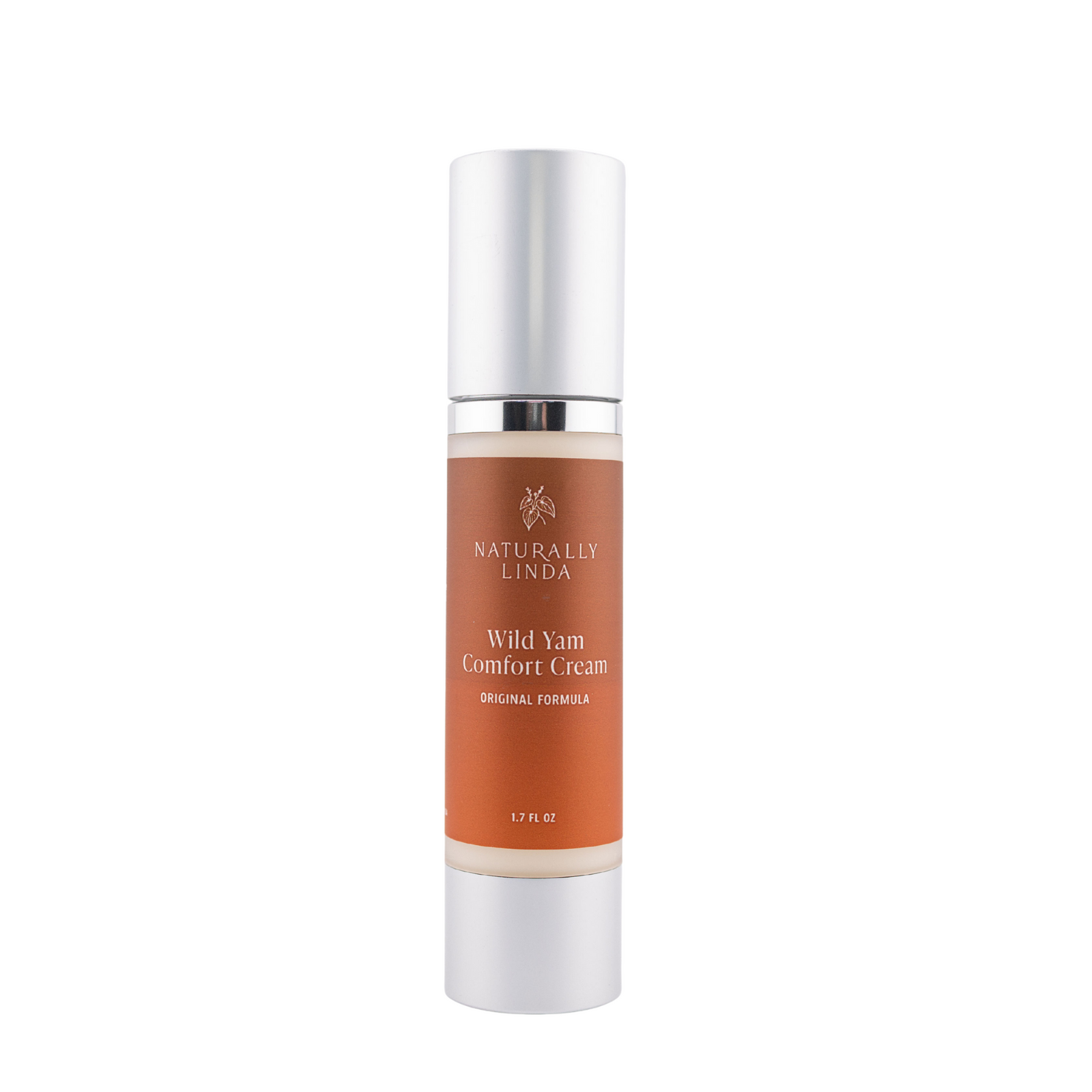



Naturally Linda’s Wild Yam Comfort Cream was third-party tested for heavy metals. Testing was performed by Contract Testing Laboratories of America (CTLA) using the USP <233> method, documented under CTLA ID 157048.
Results highlights:
-
Arsenic: below the method detection limit (<0.001 ppm)
-
Cadmium: below the method detection limit (<0.001 ppm)
-
Mercury: below the method detection limit (<0.001 ppm)
-
Lead: 0.010 ppm
Based on these results, this lot meets our specifications.
View the Certificate of Analysis
Why We Conducted Heavy Metals Testing

If you use botanical and naturally derived ingredients, you should expect customers to ask how the product is verified for purity. Heavy metals testing is one of the clearest ways to add transparency
because it provides measurable, third-party verified results.
For Naturally Linda, third-party testing is about being straightforward and accountable. Rather than relying on general assurances, we prefer to share documented results so you can make an informed decision about what you put on your body.
What Was Tested and How
The Third-Party Laboratory
Testing was conducted by Contract Testing Laboratories of America (CTLA). The results for this
submission are documented on a Certificate of Analysis identified as CTLA ID 157048.
On the COA, the sample is listed as “Linda’s Cream Cosmetic Cream.” This is the same product as
Naturally Linda’s Wild Yam Comfort Cream.
The Testing Method and Sensitivity
The COA lists the test method as USP <233>.
The COA also lists a method detection limit (MDL) of 0.001 ppm for the metals reported.
What “<0.001 ppm” means:
-
When a result is shown as “<0.001 ppm,” it means the lab did not detect that metal above the method’s detection limit for that analysis.
Why labs report results this way:
-
Analytical methods have defined sensitivity thresholds. Reporting “less than” a detection limit is a standard, conservative way to communicate that the amount, if present at all, is below what the method can reliably detect.
The Sample Tested
The COA lists:

-
Lot number: #1
-
Date received: 12/19/2025
-
Report date shown on the COA: 1/2/2026
For clarity, a COA reflects the submitted sample and the reported results for that lot.
Results at a Glance
Heavy metals test results (ppm), per CTLA ID 157048:
-

Arsenic: <0.001 ppm
-
Cadmium: <0.001 ppm
-
Mercury: <0.001 ppm
-
Lead: 0.010 ppm
Based on these results, this lot meets our specifications.
How to Read These Numbers
“Below detection limit”, explained:
-
If you see a result like “<0.001 ppm,” the lab is reporting that the metal was not detected above the method’s detection limit for that test. It is not a statement of absolute zero, but it indicates the amount is below what the method can reliably detect.
What “ppm” means:
-
“ppm” stands for parts per million. In lab reporting, it is a common unit used to describe very small concentrations in a standardized way.
Why trace readings can occur:
-
Botanical and naturally derived ingredients can be influenced by environmental factors such as soil and water. That is one reason third-party testing is valuable: it provides specific, documented results rather than assumptions.
Our Quality Commitment
We take a straightforward approach to quality: we verify with third-party documentation and share what we can in a format that is easy to understand. For this lot, CTLA’s results are documented on the COA, and based on those results, this lot meets our specifications.
When we share testing information, we do it for one reason: transparency. If you have questions about what is included on the COA or how to interpret it, our team is available to help.
View the Certificate of Analysis

Traceability details from the COA:
-
Lab: Contract Testing Laboratories of America (CTLA)
-
COA ID: 157048
-
Lot: #1
-
Method: USP <233>
-
Dates: received 12/19/2025; report date shown on COA 1/2/2026
For questions about this COA or how to read it? Contact our support team and we will help.
FAQs
Which heavy metals were tested?
This COA reports results for arsenic, cadmium, mercury, and lead.
What does “below detection limit” mean?
“Below detection limit” means the lab did not detect that metal above the method’s detection limit for the test. On this COA, arsenic, cadmium, and mercury are reported as <0.001 ppm.
Why is lead shown as a number while others are below detection?
Labs report what they observe based on the method used. In this COA, arsenic, cadmium, and mercury are reported below the detection limit, while lead is reported as a measured value of 0.010 ppm.
Does this mean every batch is tested?
This COA documents the results for the submitted sample and the lot identified on the report.
What does “meets specifications” mean?
“Meets specifications” means the results for this lot align with the acceptance criteria we use for the metals tested. The COA notes that specifications are provided by the customer, and this lot’s results are reported accordingly.
Closing Statement
We appreciate your interest and your time to review our third-party testing information. We believe transparency builds trust, and we are committed to providing clear documentation you can reference.