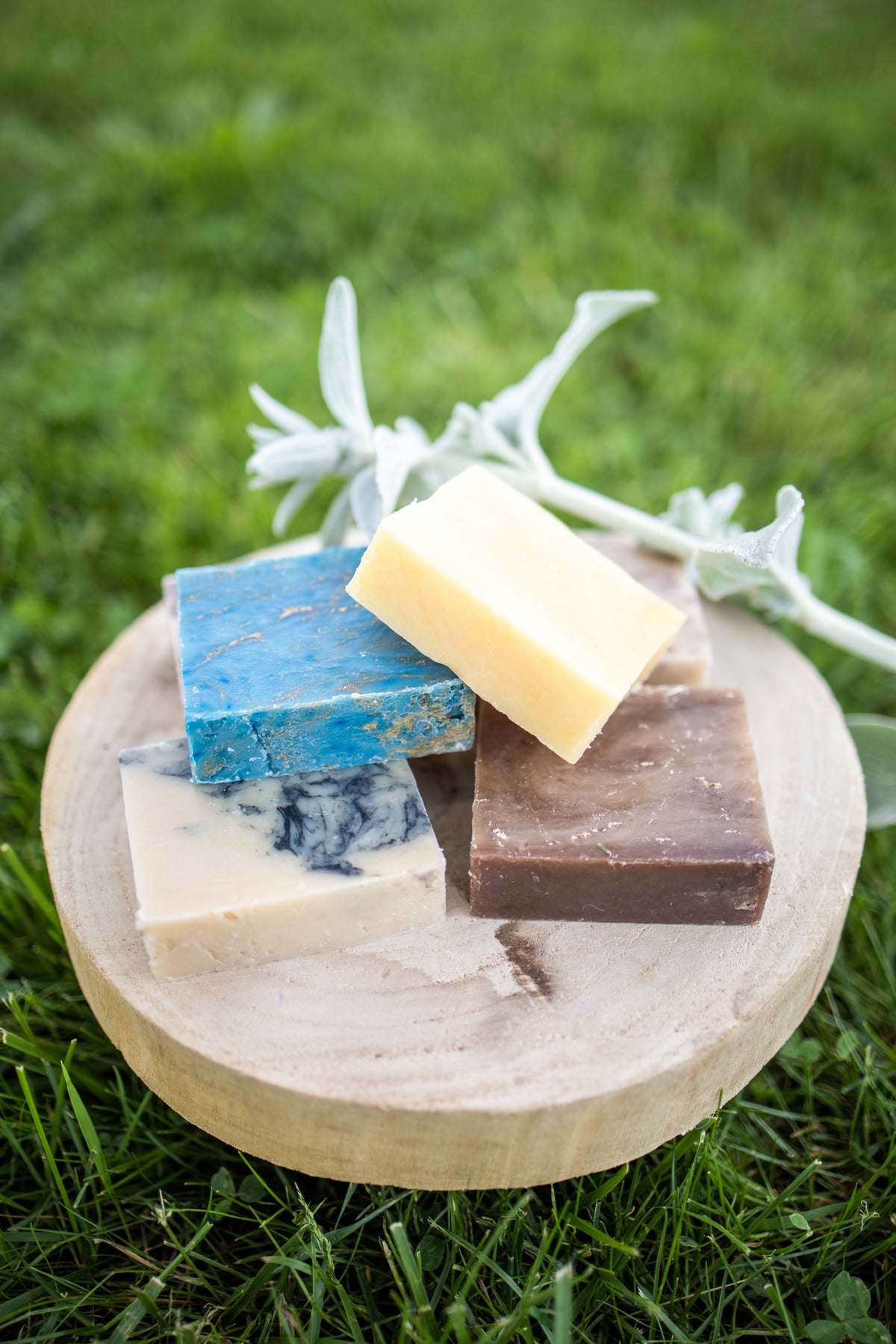



Most shampoo does one thing really well: it makes your hair feel clean in the moment. What it does not tell you is that the squeaky, shiny result comes largely from synthetic detergents and silicones that build up on the hair shaft over time. Making the switch to a natural shampoo bar changes that entirely. Our Natural Shampoo Bars are made from plant-based oils, butters, and botanicals that clear that build-up and let your hair find its own balance again.
The shampoo bar transition takes a few weeks, and this guide walks you through every part of it so you feel confident from wash one.
→ Shop the Hair Care Collection
What Actually Happens When You Switch to a Natural Shampoo Bar
Most of us grew up with liquid shampoo, so we learned to equate that squeaky-clean feeling with actually clean hair. That feeling largely comes from synthetic detergents, silicones, and coating agents that accumulate on the hair shaft over time. Hair looks shiny because it is coated, and that coating needs to clear before your hair can breathe and behave on its own terms.
When you introduce a natural shampoo bar, that clearing process begins. Your hair and scalp recalibrate, sebum production rebalances, and the hair shaft gradually returns to its natural state. That is what people call the transition period, and once you understand what is happening and why, it becomes far easier to move through it with patience and confidence.
Natural Shampoo Bar Transition Timeline: What to Expect Week by Week
Weeks 1 to 2: The Adjustment Window
The first two weeks are the most active part of the transition, and for a lot of people, the most surprising. Your scalp has spent years compensating for the stripping effect of synthetic shampoo by over-producing oil. When you take that cycle away, it takes a little time to settle into its own rhythm again. That is completely normal, and it is actually a sign that your scalp is beginning to heal.
During this window you may notice your hair feeling waxy or heavier than usual, particularly towards the ends. Your scalp might feel oilier than expected, or occasionally a little dry. Lather may feel lighter than you are used to. Give it grace. It does pass, and what comes after is worth it.
What helps most: Rinse more thoroughly than feels necessary. Most of the time, that is genuinely all it takes.
Weeks 3 to 4: The Turning Point
This is the week most people write to us. The heaviness lifts, the scalp settles, and hair starts to feel like itself again. Wash days stop feeling like an experiment and start feeling like a ritual you actually look forward to.
Beyond Week 4: Fully Settled
By the end of the first month, most people are fully through. The scalp is calm, hair feels clean and balanced, and your Natural Shampoo Bar starts to feel like the most natural thing in the world.
For those with long, thick, or heavily colour-treated hair, give yourself six weeks rather than four. Hair with more product history simply needs a little more time, and the transformation on the other side is absolutely worth the patience.
How to Use a Natural Shampoo Bar for Best Results
Technique has a greater impact on results than most people expect, so it is worth taking a moment to get it right from the start.
Option 1, direct application:
Wet your hair thoroughly, then rub the Natural Shampoo Bar directly onto your scalp and through your hair in sections. Work it in gently with your fingertips.
Option 2, lather in hands first:
Work the bar between your palms to build up a lather, then apply it to your hair. This method gives you more control and works particularly well for fine or colour-treated hair.
Either way, rinse thoroughly and then take the time to rinse again. A complete rinse is the single most important step for a smooth transition. Follow up with the Natural Conditioner Bar on the mid-lengths and ends, and your hair will thank you for it.
→ Shop the Natural Shampoo Bar
How to Store a Natural Shampoo Bar
Proper storage extends the life of your Natural Shampoo Bar significantly, and the key is simple: keep it dry between uses. A bar that stays damp between washes will soften and dissolve far faster than one with good airflow around it. The best options are:
• A Soap Saver for Bar Longevity, which lifts the bar off the surface and allows it to dry fully between uses
• A well-draining wooden soap rack with air circulating underneath
• A tin or small linen bag when travelling between uses
Natural shampoo bars and travel are a genuinely wonderful pairing. One bar covers several weeks away, fits easily into carry-on luggage with no liquid restrictions to worry about, and arrives in exactly the same condition it left. Wrap yours in a muslin cloth or tuck it into a travel tin and you are sorted.
Natural Shampoo Bar Tips by Hair Type
Natural Shampoo Bar for Oily Hair
An active scalp in the first couple of weeks is a reliable sign that sebum production is recalibrating and finding its natural balance. This is the transition doing exactly what it should.
• Washing two to three times a week gives your scalp the space it needs to regulate
• Focus the Natural Shampoo Bar on the scalp and allow it to move through the lengths naturally as you rinse
• A diluted apple cider vinegar rinse post-wash helps reset the hair’s pH and keeps the scalp feeling fresh and balanced
Most people with oily hair find that wash days become further apart after a full transition. A balanced scalp tends to stay that way.
Natural Shampoo Bar for Dry or Damaged Hair
Dry hair responds beautifully to a gentle and attentive approach during the first few weeks, when texture changes tend to be most noticeable.
• Following every wash with a Natural Conditioner Bar, focused on the mid-lengths and ends, makes a significant difference throughout the transition
• Work the shampoo bar into the scalp and allow the lather to move through the lengths as you rinse rather than working it directly through dry or brittle ends
• A weekly deep conditioning treatment while your hair adjusts is a lovely ritual worth building into your routine
Natural Shampoo Bar for Curly Hair
Curly hair is naturally more porous and tends to feel product changes more keenly. Once through the transition, Natural Shampoo Bars are consistently gentler on curl pattern and definition than conventional shampoo formulas.
• Lukewarm to cool water supports curl pattern and keeps frizz calm throughout the wash
• Apply the Natural Conditioner Bar generously and allow it to sit for a minute or two before rinsing for best results
• Detangle gently while conditioner is still in, using your fingers or a wide-tooth comb
Curls can hold residue more readily during the waxy phase of transition. Thorough rinsing paired with an apple cider vinegar rinse makes a genuinely noticeable difference.
Natural Shampoo Bar for Colour-Treated Hair
Natural Shampoo Bars are gentler on colour than sulphate-based conventional shampoos, and many people find that their colour actually holds better once the transition is complete. Synthetic surfactants are a well-known contributor to premature fade.
• Allowing freshly coloured hair at least one week to settle before switching gives the colour time to fully bond
• Cool to lukewarm water at every wash supports colour longevity and shine
• A Natural Conditioner Bar after every shampoo gives colour-treated hair the consistent moisture it responds so well to
→ Pair with the Natural Conditioner Bar
Frequently Asked Questions About Natural Shampoo Bars
Does hard water affect how a natural shampoo bar performs?
It can, particularly during the transition period. Hard water is high in minerals like calcium and magnesium, and those minerals can make lather feel like more of an effort in the first few weeks. A tablespoon of apple cider vinegar diluted in a cup of water, applied after shampooing and rinsed through, restores the hair’s natural pH and clears mineral buildup beautifully. Keep it in your routine while you are transitioning and reach for it as needed after that.
Why does my hair feel waxy after switching to a natural shampoo bar?
This is the transition working exactly as it should. Your hair is releasing build-up accumulated from years of synthetic product, and a more thorough rinse combined with an apple cider vinegar rinse will help move the process along comfortably.
Do I still need a conditioner bar when using a natural shampoo bar?
For most hair types, yes, and it makes a meaningful difference. Our Natural Conditioner Bar applied to the mid-lengths and ends supports the transition and keeps hair feeling soft and manageable throughout.
How long does a natural shampoo bar last?
A Natural Shampoo Bar stored dry between uses typically lasts the equivalent of two to three bottles of liquid shampoo, anywhere from six weeks to three months depending on hair length and wash frequency.
Can a natural shampoo bar be used every day?
Absolutely. Most people find that wash days naturally become less frequent once the transition is complete, because natural shampoo bars cleanse effectively while keeping the scalp in balance and staying fresher for longer.
Are natural shampoo bars suitable for children?
Natural Shampoo Bars are formulated from plant-based ingredients and are generally very gentle on the scalp. Checking the specific ingredients for any known sensitivities is always a good idea, and keeping lather away from young eyes is recommended.
Ready to Make the Switch?
Browse the Naturally Linda Hair Care collection to find your Natural Shampoo Bar. Pairing it with a Natural Conditioner Bar from the very first wash makes the transition noticeably smoother and gives your hair the full, nourishing reset it deserves.
Questions? Drop them in the comments or reach out directly. I genuinely love hearing from you.
With love from the farm,
Linda